


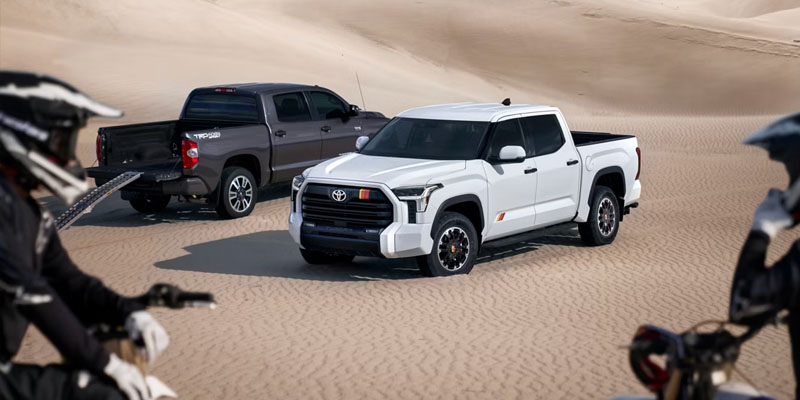
Put the 2026 Toyota Tundra and the 2026 Ford F-150 nose-to-nose and you get a fascinating contrast between two very different philosophies of truck building. One leans heavily on long-running Americana; the other blends bold engineering with a distinctly modern sense of purpose. For many drivers in Kinston, NC, that latter combination is precisely why the Tundra continues to rise as a serious, thoroughly convincing contender.
The comparison reveals a truck shaped by thoughtful engineering rather than tradition for tradition’s sake — and it shows in every mile.
Performance: Two Trucks, Two Very Different Ideas of Power
Toyota keeps the 2026 Tundra line refreshingly focused. You get two powertrains, both 3.5-liter twin-turbocharged V6 units: the i-FORCE and the i-FORCE MAX hybrid. The hybrid system’s surge of 437 hp and 583 lbs.-ft. of torque is the headline here, delivering the kind of low-end muscle that turns towing into a calm, assured affair. Up to 12,000 lbs. of towing, done without drama.
The F-150 arrives with a broader set of engine choices, including its own hybrid system, but even its electrified powertrain doesn’t quite match the Tundra MAX’s torque punch. Toyota’s twin-turbo setup also brings a wonderfully smooth, linear delivery — something you feel immediately when merging, towing, or climbing.
Interior Comfort: Tough Materials, Calm Design
Inside, the 2026 Tundra strikes that very Toyota balance between hard-wearing functionality and unexpected luxury. The 12.3-inch digital gauge cluster and the 14-inch Toyota Audio Multimedia touchscreen form a clean, modern command center, clear even at a glance.
Move up the trims and the cabin turns almost lounge-like. The 1794 Edition and Capstone serve leather-trimmed seats, real wood accents, and even massage capability — touches that soften long days on the job or long hauls along US-70.
The F-150 certainly offers plushness in its upper trims, yet the Tundra’s cabin feels more cohesive. Toyota leans into craftsmanship rather than gadgetry, resulting in an interior that feels calm, confident, and properly designed around the driver.
Capability and Towing: Built for Hard Work, Tuned for Stability
Numbers tell part of the story:
- Up to 12,000 lbs. towing
- Up to 1,850 lbs. payload
But the way the Tundra goes about its work matters just as much. The multi-link rear suspension gives the truck a planted feel, even with a loaded trailer behind it. Straight Path Assist further simplifies trailer maneuvering, an invaluable tool when backing into tight spaces.
The F-150’s figures remain competitive, but its ride under load and the overall tow-feel lack the Tundra’s modern refinement. Toyota has put real effort into stability, and it shows the moment a trailer hitch latches on.
Off-Roading: TRD Pro vs. Raptor
The 2026 Tundra TRD Pro looks every bit the part — purposeful stance, heritage grille, and all-terrain intent baked into its geometry. FOX® shocks, a 1.1-inch front lift, and rugged tires form a package that feels ready for mud, sand, and rocky climbs right out of the gate.
Ford’s Raptor is thunderous and spectacular, but the TRD Pro has a more measured charm: serious off-road capability without feeling like a truck built solely for Baja bravado. For drivers who want capability Monday through Friday and wilderness confidence on the weekend, the TRD Pro strikes the more balanced note.
Take the Tundra’s Wheel in Kinston
Stack the 2026 Tundra against the 2026 F-150 and a clear picture emerges: Toyota has shaped a truck that blends modern power, confident towing, thoughtful luxury, and real-world versatility. For drivers in Kinston, NC who need strength without sacrificing refinement, the Tundra stands out with calm authority.
Stop by Massey Toyota to experience the 2026 Tundra lineup in person and see why it’s the full-size truck that feels engineered for the next era of driving.
Connect with us

