


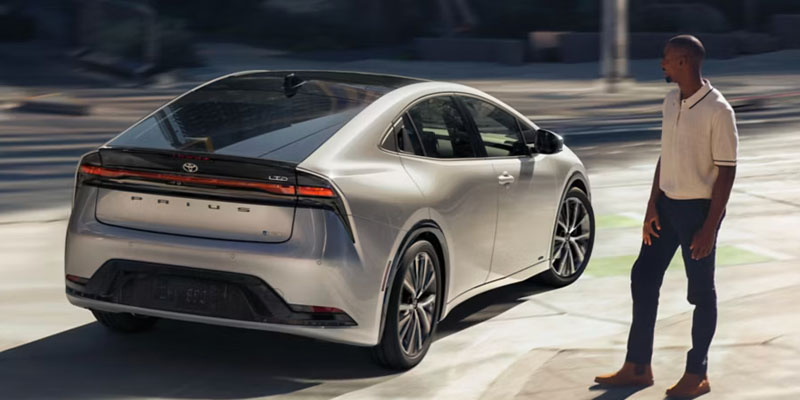
The Toyota Prius has long been a go-to choice for drivers who want an efficient, reliable hybrid sedan. But with the Prius Plug-In now in the lineup, buyers have an even more capable option to consider. Understanding the differences between the Prius and Prius Plug-In can help you make your decision before you visit the lot.
What Makes the Prius Stand Out
When it comes to the Prius vs. Prius Plug-In conversation, it helps to start with what makes the standard Prius a strong contender on its own. The 2027 Toyota Prius is a full hybrid, meaning it pairs a gasoline engine with an electric motor and recharges its battery through regenerative braking and engine power alone – no plugging in required.
This setup makes the Prius incredibly convenient for everyday driving. You fill up at the pump just like any traditional vehicle, and the hybrid system handles the rest automatically.
How the Prius Plug-In Takes It Further
The 2027 Toyota Prius Plug-in Hybrid builds on the standard Prius foundation by adding a larger battery pack that you can charge at home or at a public charging station. This is one of the most important differences between Prius and Prius Plug-In.
That larger battery means the Prius Plug-In can travel an estimated 44 miles on electricity alone before switching over to hybrid mode. If you have a shorter daily commute, it’s possible to handle most of those trips without using any gasoline at all. The Prius Plug-In is designed to maximize how much you rely on electric power, which can reduce your fuel costs significantly over time.
Charging Considerations for Prius Plug-In Owners
One thing to consider in the Prius vs. Prius Plug-In decision is whether you have reliable access to a charging outlet. Drivers in Kinston, NC, who own a home with a standard electrical outlet can charge the Prius Plug-In overnight with ease. A Level 2 home charger can speed up the process even further.
If you don’t have convenient charging access – if you rent an apartment or park in a public garage – the standard Prius may be the more practical fit. It delivers strong hybrid performance without any charging requirements, making it a low-maintenance option for a wide range of drivers.
Comparing Performance and Technology
Both vehicles share Toyota’s commitment to reliability, safety, and modern technology. Each comes equipped with Toyota Safety Sense, a suite of driver assistance features that includes pre-collision warning, lane departure alert, and automatic high beams. The differences between the Prius and Prius Plug-In in terms of cabin features are fairly minimal, as both offer a comfortable, well-designed interior.
Where the Prius Plug-In has an edge is in its overall powertrain output. The plug-in system in the Prius Plug-In is tuned to deliver a more responsive driving feel, especially in electric-only mode.
Which One Is Right for Your Lifestyle?
Choosing between the Prius vs. Prius Plug-In comes down to how you drive and what your daily life looks like. If you want a simple, dependable hybrid that requires no extra equipment or routine changes, the standard Prius is a great fit. If you’re ready to lean into plug-in technology and want the flexibility to rely on electricity for shorter trips, the Prius Plug-In is a good call.
Both models reflect Toyota’s focus on building vehicles that are efficient, dependable, and designed for the long haul. Stop by and speak with the team at Massey Toyota to explore both options and find the one that fits your life in Kinston, NC.

